
When we discover the price of an artisanal chocolate bar — sometimes three or four times that of a supermarket bar — the first reflex is often to talk about «luxury». However, this word does not accurately describe the reality. A luxury product is first defined by a margin built on the image and prestige of a brand. For quality chocolate, the reason for its selling price is simple: it is its quality. real cost of production, without any artifice.
A cost that begins well before the tablet
Cacao is a demanding fruit, grown by hand by millions of small producers in an increasingly unstable climate. The 2023-2024 price crisis has shown this well: a bad season, a disease spreading, and the entire chain is stretched. Unlike wheat or corn, cocoa is not easily mechanized — harvesting, shelling, fermentation, and drying remain largely manual work. This work has a cost, which does not disappear when a tablet is sold cheaper: it is simply shifted elsewhere, most often onto the producer’s income.
The hidden price of «cheap» chocolate»
That is where the illusion resides. Cheap industrial chocolate has not eliminated the real costs of production — it has made them invisible. To keep prices low, one has to squeeze somewhere: ridiculously low remuneration for producers, standard beans without traceability, artificial flavors to mask a lack of noble ingredients, shortened processing that does not allow the flavors to develop. The consumer pays less, but someone somewhere in the chain pays the high price in their place.
The true cost of craftsmanship
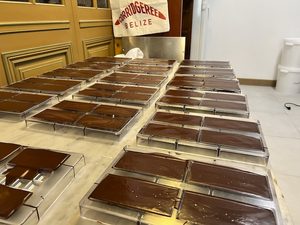
In terms of quality chocolate, each step adds a labor time that is difficult to compress: well-managed fermentation, manual sorting of the beans, prolonged conching, precise tempering, small batches without the use of automation by industrial producers. None of this is done any faster or cheaper without compromising quality. Add to that, for artisans who are in direct contact with producers, the willingness to pay for the beans at their fair value — above the world prices, which are often too low to allow plantations to simply maintain themselves.
Pay the real price, not an image surcharge
The difference lies here: luxury consists in paying more for an added image, not an added quality, or an additional intrinsic value. Paying a fair price for good chocolate simply means paying what it really costs to do it well — from planting to the tablet, through a fair remuneration for each link in the chain. This is not an outward sign of wealth: it is the honest recognition of demanding agricultural work and of a know-how that, both of which cannot be sold indefinitely without eventually disappearing.
It would be hypocritical to believe that a food that is so complex to produce can sustainably cost almost nothing.